
HVAC Maintenance Checklist: Seasonal Guide
Regular HVAC maintenance cuts energy bills by 15 to 25% and adds 5 to 10 years of system life. Use this seasonal checklist to keep your system running right.
The US Department of Energy says regular HVAC maintenance can reduce your energy bills by 15 to 25% (DOE, 2024). It also extends the useful life of your equipment by 5 to 10 years. That's real money saved on both monthly bills and the eventual replacement cost.
Most HVAC failures aren't sudden. They build up over months or years of neglected maintenance. A dirty filter restricts airflow. Restricted airflow freezes the evaporator coil. A frozen coil forces the compressor to work harder. The compressor overheats and fails. A $5 filter change could have prevented a $2,500 compressor replacement.
This checklist covers what to do yourself and when to call a professional, organized by season.
- Change your air filter every 1 to 3 months. This is the single most important maintenance task.
- Schedule professional tune-ups twice a year: spring for cooling, fall for heating.
- Regular maintenance reduces energy bills by 15 to 25% (DOE) and extends system life by 5 to 10 years.
- Keep 2 feet of clearance around the outdoor unit. Debris restricts airflow and reduces efficiency.
- Watch for warning signs: strange noises, uneven temperatures, rising energy bills, or short-cycling.
Monthly Tasks (Year-Round)
These take 5 to 10 minutes. No tools required.
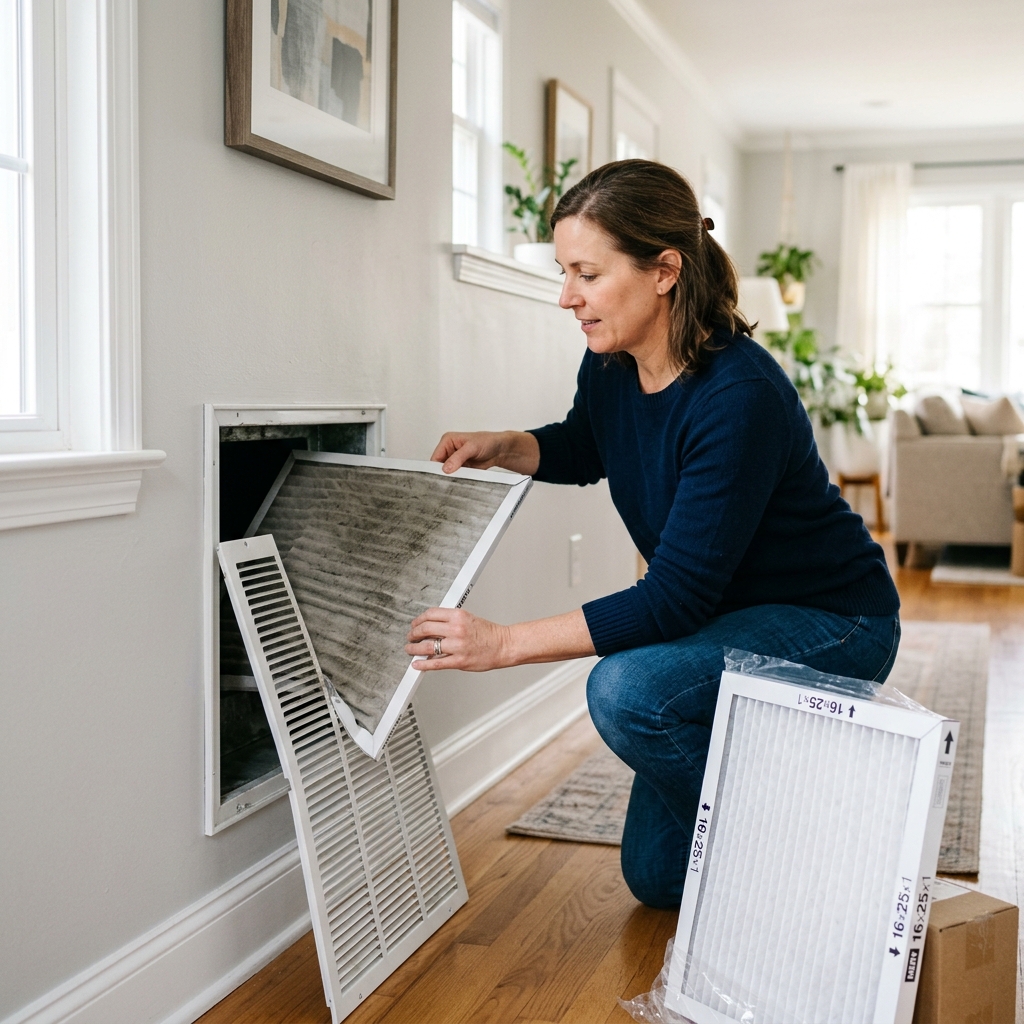
Check and replace air filters. This is the single most important thing you can do for your HVAC system. A dirty filter restricts airflow, makes the system work harder, increases energy consumption, and can freeze the evaporator coil.
How often to change it depends on the filter type and your household:
Hold the filter up to a light. If you can't see light through it, replace it.
Check thermostat settings. Make sure your thermostat is set to the right mode (heat, cool, or auto) and the temperature is where you want it. If you have a programmable thermostat, verify the schedule hasn't been reset by a power outage.
Listen for unusual noises. Your system should run quietly. Grinding, squealing, banging, or clicking sounds are warning signs. Don't ignore them.
Check supply and return vents. Make sure all vents are open and not blocked by furniture, curtains, or rugs. Blocked vents create pressure imbalances and make the system work harder.
Spring Checklist (Before Cooling Season)
Do these tasks in March or April before you need the AC.
What You Can Do Yourself
Clean the outdoor unit. Turn off the power at the disconnect switch. Remove leaves, grass clippings, and debris from around the unit. Gently spray the condenser coils with a garden hose (from inside out) to remove dirt buildup. Let it dry completely before turning the power back on.
Clear the area around the outdoor unit. Trim bushes and plants to maintain at least 2 feet of clearance on all sides and 5 feet above. Good airflow around the condenser is critical for efficiency.
Test the AC. Set your thermostat to cooling mode and lower the temperature 5 degrees below room temperature. The system should start within a few minutes. Let it run for 15 to 20 minutes and check that cold air is coming from the supply vents.
Clean the condensate drain line. Pour a cup of distilled white vinegar or a 50/50 bleach-water solution down the drain line to prevent clogs. A clogged drain causes water to back up and potentially damage your ceiling or walls.
Check the condensate drain pan. Look for standing water or rust. A cracked drain pan needs to be replaced before it causes water damage.
What Needs a Professional (Spring Tune-Up)
Schedule this with a licensed HVAC technician:
A spring tune-up typically costs $80 to $150. Many companies offer maintenance plans that include two visits per year for $150 to $300 annually. These plans often include priority scheduling and discounts on repairs.
Summer Tasks (During Cooling Season)
Continue monthly filter checks. Your system works hardest in summer. If you have a 1-inch filter, check it every 30 days.
Monitor energy bills. A sudden spike in your electricity bill with no change in usage patterns can indicate a problem: dirty coils, low refrigerant, a failing compressor, or duct leaks.
Watch for ice on the refrigerant lines. If you see frost or ice on the copper line running from the outdoor unit to the indoor unit, your system has a problem. Turn it off and call a technician. Common causes: low refrigerant, dirty filter, or a failing blower motor.
Keep the outdoor unit clear. Mow carefully around it. Don't let grass clippings accumulate on the coils.
Don't close vents in unused rooms. This creates pressure imbalances in the duct system, can damage the blower motor, and doesn't save as much energy as you'd think. If you want room-by-room control, a ductless mini-split system is the better solution.
Fall Checklist (Before Heating Season)
Do these tasks in September or October before the first cold snap.
What You Can Do Yourself
Test the heating system. Switch your thermostat to heating mode and raise the temperature 5 degrees above room temperature. The system should start within a few minutes. A slight burning smell when the furnace first fires up after months of inactivity is normal (dust on the heat exchanger burning off). It should go away within 20 to 30 minutes. If it doesn't, or if you smell gas, shut the system off and call a technician.
Replace the air filter. Start the heating season with a clean filter.
Check the carbon monoxide detector. If you have a gas furnace, make sure your CO detectors are working and have fresh batteries. Replace CO detectors every 5 to 7 years.
Inspect the flue pipe and venting. For gas furnaces, visually check the flue pipe for disconnections, corrosion, or blockages. Birds and animals sometimes nest in vent pipes during the warmer months.
Seal air leaks around the home. Check weatherstripping around doors and windows. Seal gaps with caulk or foam. This isn't HVAC maintenance per se, but reducing heat loss means your system doesn't work as hard.
What Needs a Professional (Fall Tune-Up)
Schedule this with a licensed technician:
A cracked heat exchanger is the most serious issue a technician can find. It can leak carbon monoxide into your home. This is a safety issue that requires immediate furnace replacement.
Winter Tasks (During Heating Season)
Continue monthly filter checks. Your furnace runs constantly during cold months. A dirty filter in January can cause the heat exchanger to overheat and trigger a safety shutdown.
Keep outdoor heat pump units clear of snow and ice. If you have a heat pump, brush snow off the top and sides of the outdoor unit. Don't let ice accumulate on the coils. The defrost cycle should handle light frost, but heavy ice buildup indicates a problem.
Monitor for short-cycling. If the furnace turns on, runs for 2 to 3 minutes, shuts off, and repeats, it's short-cycling. Common causes: dirty filter, overheating, thermostat issues, or an oversized system.
Check humidity levels. In cold climates, indoor humidity drops during winter because cold air holds less moisture. If your home feels dry (cracked skin, static electricity, dry nose), a whole-house humidifier connected to your HVAC system can help. Target 30 to 50% relative humidity.
Warning Signs That Need Immediate Attention
Call a technician if you notice any of these:
For a step-by-step troubleshooting guide when your AC stops working, see our post on HVAC not cooling.
How Much Does HVAC Maintenance Cost?
| Service | Cost Range |
|---|---|
| Air filter (1-inch pleated) | $5 to $15 each |
| Spring AC tune-up | $80 to $150 |
| Fall furnace tune-up | $80 to $150 |
| Annual maintenance plan | $150 to $300/year |
| Duct cleaning | $300 to $500 |
| Duct sealing | $1,000 to $3,000 |
| Condensate drain cleaning | $75 to $150 |
Frequently Asked Questions
How often should you service your HVAC system?
Twice a year. Schedule a cooling tune-up in spring and a heating tune-up in fall. Between professional visits, change your air filter every 1 to 3 months and keep the outdoor unit clear of debris.
Can I do HVAC maintenance myself?
You can handle basic tasks: filter changes, cleaning the outdoor unit, checking vents, clearing the condensate drain, and testing the system. Leave refrigerant work, electrical testing, heat exchanger inspections, and anything involving the sealed refrigerant system to a licensed technician. Handling refrigerant requires EPA 608 certification.
What happens if you never service your HVAC?
The system loses efficiency gradually, consuming more energy for the same output. Filters clog, coils get dirty, and components wear out faster. A neglected system typically lasts 10 to 12 years instead of 15 to 20. It also has a higher risk of sudden failure during extreme weather, which is the worst time to need emergency service.
Is an HVAC maintenance plan worth it?
If you wouldn't otherwise schedule the twice-yearly tune-ups, yes. A $150 to $300 annual plan covers both visits and often includes priority scheduling and repair discounts. The energy savings from a well-maintained system typically exceed the plan cost.
How do I know if my ducts are leaking?
Signs include: uneven temperatures between rooms, excessive dust, high energy bills, and rooms that never reach the thermostat setpoint. A technician can test duct leakage with a duct blaster or smoke test. The DOE estimates leaky ducts waste 20 to 30% of conditioned air.
Summary
HVAC maintenance is simple, cheap, and it works. Here's the minimum you should do:
A well-maintained system lasts longer, costs less to run, and breaks down less often. That's the whole pitch. There's no mystery to it.
About WorkerGear Team
HVAC Instructor and Certified EPA Technician. Dedicated to helping students and HVAC apprentices pass their trade certification exams on the first attempt with expert tips and exam insights.