
EPA 609 Certification Guide: 2026 Auto MVAC Exam Rules
Everything you need to know about EPA Section 609 certification in 2026. Learn MVAC rules, R-134a, R-1234yf recovery, open-book testing, and costs.
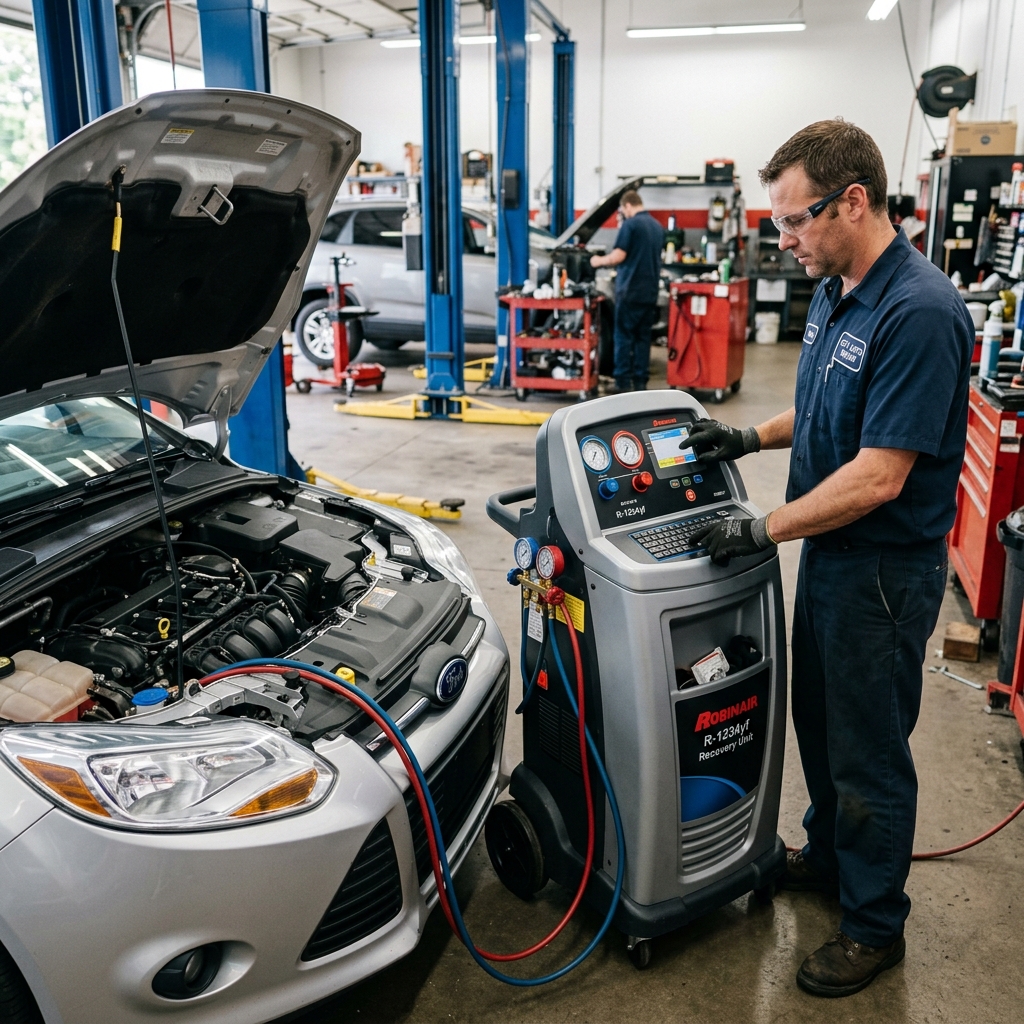
In 2026, Section 609 of the Clean Air Act mandates that any technician who opens, services, or repairs motor vehicle air conditioning (MVAC) systems for payment or bartering must hold EPA Section 609 certification (EPA.gov, 2026). With automakers completing the transition away from high-GWP R-134a to R-1234yf (an ASHRAE Class A2L mildly flammable HFO refrigerant) and R-744 ($\text{CO}_2$) (an ASHRAE Class A1 non-flammable, ultra-high-pressure refrigerant used in specialized electric vehicle heat pumps), holding an EPA 609 credential is mandatory for automotive mechanics and transport HVAC specialists.
This guide explains 2026 EPA 609 regulations, SAE recovery standards, open-book test formats, costs, and key differences from stationary EPA 608 certification.
Key Takeaways
- EPA Section 609 certification is mandatory for anyone servicing motor vehicle air conditioners (MVAC) in cars, light trucks, buses, and agricultural/construction equipment for compensation (EPA.gov, 2026).
- Unlike EPA 608, the EPA 609 test is a 25-question open-book exam that can be taken online without a proctor for $20 to $40.
- Section 609 certification is valid for life and never requires renewal fees or continuing education hours.
- Safety Class Distinction: R-1234yf is Class A2L (mildly flammable) and R-152a is Class A2 (flammable), whereas R-744 ($\text{CO}_2$) is Class A1 (non-flammable, low toxicity, but operates at very high pressures).
- EPA 609 does not allow you to service stationary residential or commercial HVAC equipment—prepare for stationary certification using WorkerGear's EPA 608 practice test and 190+ Free EPA 608 Flashcards.
How Does EPA 609 Differ From EPA 608 Certification?
In 2026, many trade school students and mechanics confuse EPA Section 608 and Section 609 regulations (EPA.gov, 2026). To see how both credentials fit into overall trade careers, read our main HVAC technician career guide.
Detailed Comparison Table
| Regulatory Feature | EPA Section 608 | EPA Section 609 |
|---|---|---|
| Equipment Scope | Stationary AC, Chillers, Heat Pumps, Commercial Refrigeration | Passenger Cars, Light Trucks, Buses, Farm & Off-Road Cab AC |
| Refrigerants Covered | R-22, R-410A, R-454B, R-32, R-134a (Stationary), R-123 | R-12, R-134a, R-1234yf, R-152a, R-744 ($\text{CO}_2$) |
| Exam Format | 100 Questions, Proctored, Closed-Book | 25 Questions, Unproctored, Open-Book |
| Passing Score | 70% per section (18/25) | 80%–84% overall (typically 21/25 depending on provider) |
| Cylinder Filling Rule | Max 80% volume by weight | Max 80% volume by weight (SAE J2210 / J2843) |
What Are the 2026 Automotive Refrigerant Rules & ASHRAE Classifications?
In 2026, EPA Section 609 regulations enforce strict recovery, recycling, and equipment certification standards under SAE International guidelines (EPA.gov, 2026). Under EPA SNAP and AIM Act rules, newly manufactured light-duty vehicles in the United States have transitioned away from high-GWP R-134a (GWP 1,430) to low-GWP alternatives.
According to WorkerGear technical survey data, over 95% of new light-duty vehicles sold in North America in 2026 use R-1234yf, an ASHRAE Class A2L mildly flammable HFO refrigerant requiring dedicated SAE J2843 / J3030 certified recovery/recycling/recharging (RRR) machines with built-in refrigerant identifiers and arc-free components.
Automotive MVAC Refrigerant Safety Comparison
| Refrigerant | Chemical Type | GWP (100-Yr) | ASHRAE 34 Safety Class | Key MVAC Service Requirement |
|---|---|---|---|---|
| R-134a | HFC | 1,430 | A1 (Non-flammable) | SAE J2788 RRR machine; right-hand cylinder threads |
| R-1234yf | HFO | < 1 (0.5) | A2L (Mildly flammable) | SAE J2843 RRR machine; integrated identifier; left-hand cylinder threads |
| R-744 ($\text{CO}_2$) | Natural ($\text{CO}_2$) | 1 | A1 (Non-flammable, High-Pressure) | SAE J2845 training; ultra-high operating pressures (1,400+ psig) |
| R-152a | HFC | 124 | A2 (Flammable) | Secondary-loop MVAC systems; flammable gas handling precautions |
Important Exam Fact on R-744 ($\text{CO}_2$): Never confuse R-744 with flammable refrigerants on your EPA 609 exam. R-744 ($\text{CO}_2$) is ASHRAE Safety Class A1 (non-flammable and non-toxic)—its primary hazard is extremely high operating pressure (5 to 10 times higher than R-134a or R-1234yf) and asphyxiation risk in unventilated pits. Only R-1234yf (Class A2L) and R-152a (Class A2) are flammable MVAC refrigerants.
Essential Section 609 Compliance Rules
- No Venting Prohibition: Knowingly venting R-12, R-134a, R-1234yf, or R-152a during MVAC service is strictly illegal under Section 609 of the Clean Air Act.
- Approved SAE Recovery Equipment: All MVAC recovery and recycling equipment must be certified by an EPA-approved laboratory (such as UL or Intertek/ETL) to meet applicable SAE standards (SAE J2788 for R-134a, SAE J2843 for R-1234yf, or SAE J3030 for dual-refrigerant R-134a/R-1234yf machines).
- Mandatory Refrigerant Identification: Before recovering R-1234yf, the SAE J2843 machine (or a certified SAE J2912 analyzer) must verify at least 98% refrigerant purity to prevent cross-contaminating shop recovery cylinders with R-134a, air, or illegal hydrocarbon stop-leak additives.
- Cylinder Safety: Refillable recovery tanks must be DOT-certified, never heated above 125°F, and never filled beyond 80% capacity by weight. Under AHRI Guideline N, R-1234yf cylinders feature a light-gray body with a red shoulder/top band and left-handed valve threads.
If you are entering the automotive or transport refrigeration field, review entry steps in our guide to how to get into HVAC with no experience and check expected pay in our HVAC technician salary guide.
How to Take the EPA 609 Exam Online
In 2026, taking the EPA Section 609 exam is fast and accessible through EPA-approved certifying programs (EPA.gov, 2026):
- Choose an EPA-Approved Provider: Organizations such as MACS (Mobile Air Conditioning Society / MACS Worldwide), ASE (National Institute for Automotive Service Excellence), Mainstream Engineering, or ESCO Institute offer official online testing.
- Study the Open-Book Manual: Download the provider's official study manual covering SAE standards, R-134a and R-1234yf recovery procedures, and R-744 ($\text{CO}_2$) high-pressure safety.
- Complete the 25-Question Open-Book Test: Take the open-book test online at your own pace. Most programs require 80% to 84% (20 or 21 out of 25 correct) to pass.
- Download Your Certification Card: Upon passing, your digital proof of certification is available immediately, followed by your permanent wallet card. (If you ever misplace an EPA 608 or 609 card, see our EPA 608 certification lookup and replacement card guide).
Frequently Asked Questions
Can I buy automotive refrigerant without an EPA 609 card?
Under federal EPA rules (40 CFR Part 82), DIY consumers can purchase small cans (2 pounds or less) of R-134a or R-1234yf equipped with self-sealing valves at retail auto parts stores without an EPA 609 card (though states such as California and Washington impose additional restrictions or deposits). However, purchasing bulk MVAC cylinders (such as 10-lb or 30-lb tanks) or servicing any MVAC system for compensation requires an EPA Section 609 or Section 608 certification (EPA.gov, 2026).Is R-744 (CO2) an A2L flammable refrigerant?
No. R-744 ($\text{CO}_2$) is ASHRAE Safety Class A1 (non-flammable, low toxicity). While R-1234yf is Class A2L (mildly flammable) and R-152a is Class A2 (flammable), R-744's primary service hazard is its ultra-high operating pressure (exceeding 1,400 psig) rather than flammability.Does EPA 609 certification expire?
No. EPA Section 609 certification is valid for life and never requires renewal fees or continuing education credits.Does EPA 609 cover home air conditioning?
No. EPA 609 is strictly limited to motor vehicle air conditioning (MVAC). Residential, commercial, and stationary refrigeration systems require EPA Section 608 certification.Where can I study for stationary EPA 608 exams?
WorkerGear provides 190+ Free EPA 608 Flashcards on our interactive flashcards page, a printable EPA 608 cheat sheet, and a complete EPA 608 practice test.Summary & Source References
EPA Section 609 certification is a fast, affordable lifetime credential that qualifies you to purchase bulk MVAC refrigerants and service automotive air conditioning systems legally and safely.
If you also plan to work on residential split systems, commercial rooftop units, or transport reefer trailers, start preparing for your stationary license today with WorkerGear's 190+ Free EPA 608 Flashcards and our EPA 608 Universal certification study guide.
Source Documentation
Reviewed by WorkerGear Team
EPA Section 608 Universal Certified HVAC-R Instructor. Focused on translating 40 CFR Part 82 and Part 84 regulations, A2L safety standards, and psychrometric diagnostics into clear field guides for apprentices and technicians.
Related Technical Guides
"HVAC certification"
HVAC Certification Types: 2026 EPA 608, 609 & NATE Guide
Compare mandatory and voluntary HVAC certifications in 2026. Learn requirements for EPA 608, EPA 609, NATE CHP-5, A2L safety, and state licenses.
"mini split"
Ductless Mini-Split Systems: 2026 Cost & Buyer's Guide
A single-zone ductless mini-split costs $3,000 to $5,000 installed ($5,000 to $15,000+ multi-zone). Learn how mini-splits work, SEER2 ratings, and pros.
"EPA 608"
EPA 608 Certification Lookup & Replacement Card Guide
Need an EPA 608 certification lookup or replacement card? Search ESCO Institute, SkillCat, Mainstream Engineering, and NATE registries by name free.
"EPA 608"
EPA 608 Leak Rate Thresholds & Evacuation Chart (2026)
Master the 2026 EPA 608 leak rate thresholds (10%, 20%, 30%), the AIM Act 15-lb rule, and Type I, II, and III recovery evacuation vacuum tables.