
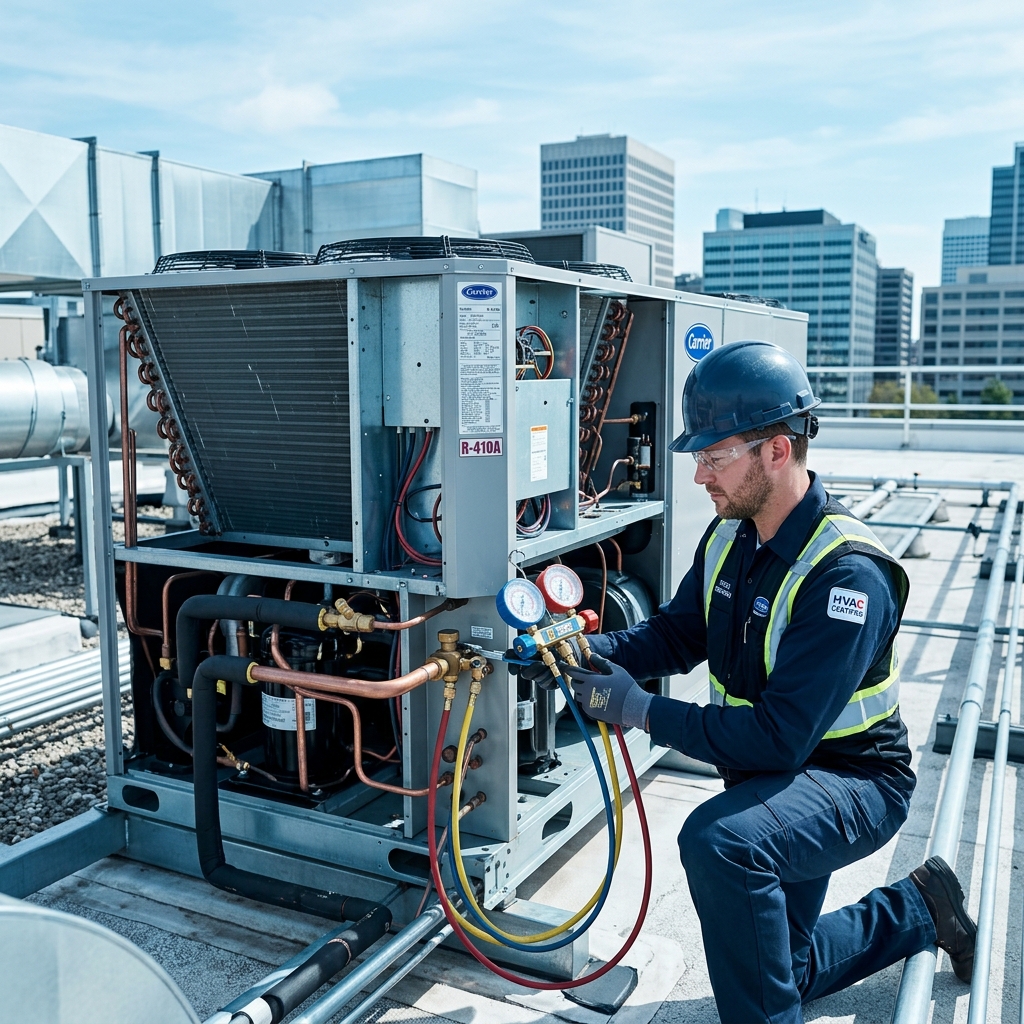
How to Pass the EPA 608 Exam First Try
73% of techs fail the EPA 608 exam on their first attempt. This 2026 study guide covers all four sections with a 3-week plan and EPA 608 practice test tips.
Industry training platforms report that up to 73% of technicians fail the EPA 608 Universal exam on their first attempt. That's nearly three out of four test-takers walking out without a passing score.
The exam itself isn't impossibly hard. It's 100 multiple-choice questions across four sections. But most people underestimate the regulatory content, skip over the Core section, and show up unprepared for questions about penalty amounts and international agreements they've never thought about on the job.
This guide breaks the exam down section by section. You'll get a week-by-week study plan, a look at which sections trip up which types of technicians, and the 2026 regulation changes you need to know before test day.
- The EPA 608 Universal exam has 100 questions across four sections, and you need 70% (18/25) on each to pass.
- The Core section is the most failed section because it tests regulations, not mechanical skills.
- Budget 2-4 weeks of focused study, doing 15-20 practice questions per day.
- In 2026, the EPA dropped the leak repair threshold from 50 lbs to 15 lbs for HFC systems. Expect exam questions on this change.
What Is the EPA 608 Certification and Who Needs It?
In 2024, the Bureau of Labor Statistics counted 425,200 HVAC mechanics and installers working in the United States (BLS Occupational Employment Statistics, 2024). Every single one of them needs an EPA 608 certification to legally handle refrigerants.
Here's the rule: under 40 CFR Part 82, Subpart F, anyone who maintains, services, repairs, or disposes of equipment containing regulated refrigerants must hold this certification. No exceptions. If you touch refrigerant on the job, you need the card.
The certification comes in four levels:
Most employers want Universal certification. It's the only level that doesn't limit what equipment you can service.
One thing that surprises new techs: the certification never expires. Once you pass, you're certified for life. The EPA doesn't require renewals or continuing education credits. That said, the regulations themselves keep changing, so staying current is on you.
The industry also has a labor shortage. In 2025, estimates put the gap at 110,000 to 225,000 open HVAC technician positions (ServiceTitan, 2025). Getting certified is the first step into a field that badly needs people.
Drilling vocabulary and key terms with flashcards before diving into practice tests is one of the fastest ways to build that foundation.
How Is the EPA 608 Exam Structured?
The Universal EPA 608 exam has 100 multiple-choice questions, divided into four sections of 25 questions each. You must score at least 70% on every section individually to pass, which means getting 18 out of 25 correct per section (EPA 40 CFR Part 82, current).
That "per section" part catches people off guard. You can't bomb Core and make up for it by acing Type I. Each section stands on its own.
Here's what each section covers:
Core (25 questions)
Federal regulations, the Montreal Protocol, the Clean Air Act, refrigerant safety, and the refrigeration cycle. This section is all law and theory. No wrenches involved.Type I (25 questions)
Small appliances with a charge under 5 pounds. Recovery requirements for hermetically sealed systems. This section is considered the easiest by most test-takers.Type II (25 questions)
High-pressure and very-high-pressure equipment. This is where most residential and commercial HVAC work lives. Recovery, recycling, and reclaiming procedures for systems using R-22, R-410A, and similar refrigerants.Type III (25 questions)
Low-pressure appliances, primarily centrifugal chillers. If you've only done residential work, this section will feel unfamiliar.One more rule to know: Type I can be taken as an open-book, mail-in exam. But if you're going for Universal (and you should), the entire exam is closed-book and proctored. No notes, no phone, no looking anything up.
A quick-reference cheat sheet with all the key numbers (evacuation depths, leak rate triggers, refrigerant classifications) is worth printing and keeping next to your study materials.
Which Section Is the Hardest?
Training providers consistently report the Core section as the most frequently failed part of the EPA 608 exam, with first-attempt failure rates across all sections reaching as high as 73% according to multiple training platform estimates (2025). The reason is counterintuitive: Core doesn't test what you do on the job.
Here's what actually happens. A technician with 10 years of residential experience walks into the exam confident. They know how to braze, pull a vacuum, and charge a system. Then Core hits them with questions about the Montreal Protocol's implementation date, specific fine amounts under the Clean Air Act, and the difference between recycling and reclaiming (hint: one requires lab processing).
The hardest section depends on your background, and no other guide will tell you this:
If you're an experienced residential tech, Core is your danger zone. You know the hands-on work cold, but you probably haven't memorized the specific regulatory dates and dollar amounts. Study the legal details first.
If you're a residential-only tech, Type III will also be tough. Centrifugal chillers use low-pressure refrigerants and operate below atmospheric pressure. If you've never worked in a large commercial building, these concepts will feel foreign. Spend extra time on purge units, rupture discs, and low-pressure recovery procedures.
If you're a trade school student, the exam is more even across sections because you're learning everything from scratch. Your advantage is that you're actually studying the regulations as part of your coursework. Don't lose that advantage by rushing through Core review.
What we see in practice: Based on quiz data from EPA 608 practice platforms, students score an average of 12% lower on Core regulatory questions during their first week of study compared to the equipment-specific Type sections. That gap typically closes by week two, once students start drilling the regulatory terms with flashcards.
The bottom line? Don't assume you know Core because you've been in the trade. That assumption is exactly what fails people.
How to Build a Study Plan That Works
Budget 2-4 weeks for the Universal exam. The BLS reports that roughly 40,000 new technicians are needed annually just to replace retirees (BLS/IIR, 2025), so getting certified quickly matters for your career. But "quickly" still means structured prep, not cramming the night before.
Here's a 3-week plan that works:
Week 1: Core + Type I
Start with Core. It's the foundation for everything else and the section most people underestimate. Spend 3-4 days drilling regulatory content: specific laws, fine amounts, the "three R's" (recovery, recycling, reclaiming), and proper cylinder handling (never fill past 80% capacity). Then move to Type I for the last 2-3 days. Type I is the shortest and most straightforward section.Week 2: Type II + Type III
Type II covers the equipment most technicians work on daily, so it should feel familiar. Spend 3 days here. Then shift to Type III for the remaining 3-4 days. Give yourself extra time on low-pressure concepts if you don't have commercial chiller experience.Week 3: Full Mock Exams + Weak Spots
Take at least two full 100-question mock exams under timed conditions. Review every wrong answer. Go back to the sections where you score below 70% and hit those topics again.Daily habits that work: Do 15-20 practice questions every day. Use a practice test app that scores you by section so you can see exactly where you're weak. Don't just read a study manual cover to cover. Active recall (testing yourself) beats passive reading every time.
And don't skip mock exams. Taking a full 100-question Universal practice test under realistic conditions is the single best predictor of how you'll perform on test day.
2026 Regulation Updates You Need to Know
The American Innovation and Manufacturing (AIM) Act mandates an 85% phasedown of HFC production and consumption by 2036 (EPA, 2020). That phasedown is already changing what shows up on the EPA 608 exam.
The biggest change for 2026: the EPA lowered the leak repair threshold from 50 pounds to 15 pounds for appliances containing HFCs or HFC substitutes with a GWP greater than 53. This took effect January 1, 2026, under 40 CFR Part 84, Subpart C. What does that mean in practice? A lot more mid-sized systems (commercial rooftop units, larger split systems) now fall under mandatory leak repair and reporting requirements. Before 2026, these systems were exempt.
Here are the annualized leak rate triggers that force mandatory repair:
If a system exceeds its trigger rate, the owner must repair and verify the fix within 30 days.
The other exam-relevant change: the R-410A to R-454B transition. As of January 2025, manufacturers stopped producing new residential systems using R-410A. The replacement, R-454B, is classified as an A2L refrigerant, meaning it's mildly flammable. Expect the exam to test your knowledge of A2L safety protocols, which differ from the A1 (non-flammable) procedures most techs learned originally.
The repair share of HVAC industry revenue has been growing as tighter regulations create more mandatory maintenance and inspection work. More repair work means more technicians who need to know the current rules cold.
Best EPA 608 Practice Test Resources (Free and Paid)
In 2025, NATE-certified HVAC technicians earned an estimated $15,000 more per year than their uncertified peers (HouseCallPro, 2025). Getting certified pays for itself fast. The median HVAC technician salary sits at $59,810 per year according to BLS data. With the right credentials, you can push well past that.
Here's what to use:
Free Resources
Practice Test Apps
The best way to study is active recall: test yourself, check the answer, understand why. A good practice test app should score you by section (not just a combined total), give you explanations for every answer, and let you take full timed mock exams.Look for an app or platform that checks all those boxes. The App Store and Google Play both have several EPA 608 practice test apps with section-specific quizzes and progress tracking.
What the data shows: Students who complete at least 200 practice questions before their exam date consistently report feeling "confident" or "very confident" going into test day. The key factor isn't total time spent studying; it's consistency. Doing 15-20 questions per day for two weeks beats cramming 300 questions the weekend before.
What to Look for in Any Study Resource
Does it cover all four sections separately? Does it explain why each answer is right (not just flag the correct letter)? Does it include questions on 2026 regulatory updates? If the answer to any of those is no, find a better resource.Use flashcards alongside practice tests to lock in the regulatory terms that show up on Core. Spaced repetition (reviewing cards at increasing intervals) is the most effective method for memorizing regulatory dates and fine amounts.
Frequently Asked Questions
How hard is the EPA 608 exam?
The Universal exam is moderately difficult. Training platform data suggests up to 73% of first-time test-takers fail at least one section (multiple provider estimates, 2025). The difficulty comes from the Core section's regulatory content, not the technical material. Structured study over 2-4 weeks drops the failure risk significantly.
What score do you need to pass EPA 608?
You need 70% on each section, which means 18 out of 25 questions correct per section. The sections are graded independently, per EPA 40 CFR Part 82. You can't average your scores across sections. A 90% on Type I won't compensate for a 60% on Core.
Does EPA 608 certification expire?
No. EPA 608 certification is valid for life with no renewal requirement. The EPA does not mandate continuing education or recertification. However, the regulations themselves change (like the 2026 leak threshold update), so staying current on rule changes is your responsibility.
Can you retake a failed section?
Yes. If you fail one section, you only need to retake that specific section. You keep the scores from sections you already passed. Retake policies and fees vary by certifying organization, but the EPA allows it.
How much does the EPA 608 exam cost?
Costs range from $20-$40 for online proctored exams to $100-$200+ for in-person training packages that include the test. The exam fee depends on the certifying organization. Some employers cover the cost as part of your onboarding or apprenticeship.
What to Do Next
Here's where you stand after reading this guide:
The HVAC industry needs roughly 40,000 new certified technicians every year just to replace retirees (BLS, 2025). Getting your EPA 608 certification is how you get in the door.
Start studying today. Pick a practice test resource, commit to 15-20 questions per day, and take at least two full mock exams before you schedule your test date.
This guide is an independent study resource. It is not affiliated with, endorsed by, or sponsored by the U.S. Environmental Protection Agency. Passing practice tests does not constitute EPA certification. Always confirm current requirements at epa.gov and take your certification exam through an EPA-approved certifying program.
About WorkerGear Team
HVAC Instructor and Certified EPA Technician. Dedicated to helping students and HVAC apprentices pass their trade certification exams on the first attempt with expert tips and exam insights.