
Ductless Mini-Split Systems: Cost & Guide
A ductless mini-split costs $3,000 to $7,000 installed and cools zones without ductwork. Learn how mini-splits work, cost factors, and top benefits.
About 75% of American homes have air ducts (EIA, 2020 RECS). The other 25% don't. If your home falls in that second group, or if you're adding a room that can't easily connect to your existing ductwork, a ductless mini-split is probably the most practical solution.
Mini-splits aren't new technology. They've been the default HVAC system in Japan and much of Europe for decades. In the US, they've gone from niche product to mainstream option in the last 10 years, driven by better cold-climate performance and federal tax incentives that make them cheaper to install.
This guide covers how mini-splits work, what they cost, where they make sense, and where they don't.
- A single-zone ductless mini-split costs $3,000 to $5,000 installed. Multi-zone systems run $5,000 to $15,000+.
- Mini-splits have SEER2 ratings of 15 to 30+, making them the most efficient residential cooling option.
- They work well in older homes without ducts, room additions, and for zone-based climate control.
- Modern cold-climate mini-splits can heat effectively down to -15°F.
- Each indoor unit controls its own temperature, so you only condition rooms you're using.
How Does a Ductless Mini-Split Work?
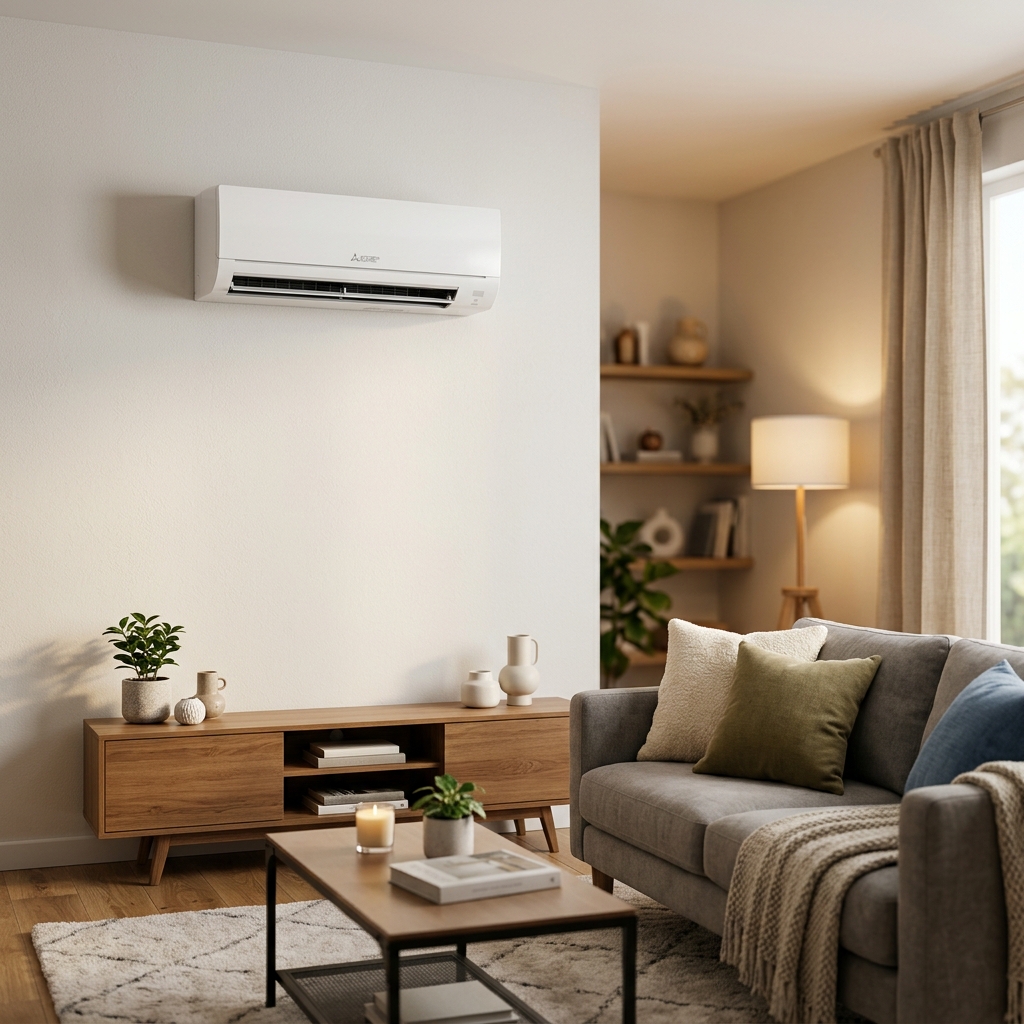
A ductless mini-split has two main parts: an outdoor compressor/condenser unit and one or more indoor air-handling units mounted on walls or ceilings. A small conduit running through the wall connects them. That conduit carries refrigerant lines, a power cable, and a condensate drain.
The indoor unit pulls warm air from the room, passes it over a cold evaporator coil, and blows cooled air back out. The refrigerant carries the absorbed heat to the outdoor unit, where the condenser releases it. In heating mode, the system reverses: the outdoor unit extracts heat from outside air and sends it indoors.
Each indoor unit has its own thermostat and remote control. If you have three indoor units, you can set the bedroom to 68°F, the living room to 72°F, and leave the guest room off entirely. That's zone control, and it's the biggest advantage of a ductless system.
A single outdoor unit can support up to 5 indoor units in most configurations. The outdoor unit connects to each indoor unit through its own set of refrigerant lines.
How Much Does a Mini-Split Cost?
Mini-split pricing depends on how many zones you need and the system's capacity.
| Configuration | Equipment Cost | Installation Cost | Total Installed |
|---|---|---|---|
| Single-zone (1 indoor unit) | $1,500 to $2,500 | $1,500 to $2,500 | $3,000 to $5,000 |
| Dual-zone (2 indoor units) | $2,500 to $4,000 | $2,500 to $4,000 | $5,000 to $8,000 |
| Multi-zone (3 to 5 units) | $4,000 to $8,000 | $3,000 to $7,000 | $7,000 to $15,000 |
If you're comparing total system cost to a ducted setup, read our full HVAC cost breakdown.
Mini-split heat pumps qualify for the same IRA tax credit as ducted heat pumps: up to $2,000 for qualifying installations through 2032 (Energy.gov, 2024).
Where Ductless Mini-Splits Make Sense
Mini-splits solve specific problems that ducted systems can't. Here's when they're the right call:
Older homes without ductwork. Many homes built before 1960 use radiators, baseboard heaters, or window AC units. Adding ductwork to these homes often means tearing open walls and ceilings. A mini-split avoids all of that. The only wall penetration is a 3-inch hole for the conduit.
Room additions and garage conversions. Extending your existing ductwork to a new room is expensive and often reduces performance for the rest of the house. A single-zone mini-split is a self-contained solution.
Finished basements and attics. These spaces are notoriously hard to keep comfortable with a central system. A dedicated mini-split head gives them independent temperature control.
Hot and cold spots. If one room in your house is always too hot or too cold, a mini-split in that room can fix the problem without reworking your entire duct system.
Supplementing an existing system. Some homeowners add a mini-split to a sunroom, home office, or master bedroom while keeping their central system for the rest of the house.
Where Mini-Splits Don't Work as Well
Whole-house conditioning in larger homes. If you have 6+ rooms that all need heating and cooling, a ducted system is usually cheaper per room. Installing 6 individual indoor units gets expensive and clutters your walls.
Open floor plans with high ceilings. A single mini-split head struggles to distribute air evenly in a large open space with 12-foot ceilings. Ducted systems with ceiling registers handle this better.
Aesthetics. The indoor units are visible on the wall. Some homeowners don't like the look. Ceiling cassette models are less visible but cost more to install.
Mini-Split Efficiency: Why the Ratings Are So High
Ductless mini-splits consistently have the highest efficiency ratings of any residential HVAC equipment. Here's why:
No duct losses. In a central system, 20 to 30% of conditioned air can be lost through leaky or poorly insulated ductwork, according to the DOE. Mini-splits eliminate that loss entirely because air goes directly from the indoor unit to the room.
Inverter-driven compressors. Most mini-splits use inverter compressors that adjust speed continuously rather than cycling on and off. This uses less electricity and maintains more consistent temperatures.
Zone control. You only condition rooms you're actually using. A central system conditions the entire house whether anyone is in those rooms or not.
Top-rated mini-splits reach SEER2 ratings above 30. For comparison, a standard ducted central AC is in the 14 to 22 SEER2 range.
Cold-Climate Performance
Early mini-splits lost effectiveness below freezing. That's no longer true. Modern cold-climate models from Mitsubishi (Hyper-Heat), Fujitsu (XLTH), and LG (Red) maintain rated heating capacity down to -15°F and continue operating at reduced capacity down to -22°F.
These units use enhanced vapor injection (EVI) compressors that inject refrigerant at an intermediate pressure during the compression cycle, which keeps heating output high even when outdoor temperatures drop.
If you're in a cold climate and considering a heat pump vs. a furnace, a cold-climate mini-split is a legitimate contender. Many homeowners in Maine, Minnesota, and Vermont have switched to them as their primary heating source.
Maintenance Requirements
Mini-splits need regular maintenance, though the list is shorter than a ducted system because there are no ducts to inspect.
Monthly: Clean or rinse the washable filters in each indoor unit. This takes 5 minutes per unit. Dirty filters reduce airflow and efficiency.
Annually: Have a technician inspect the outdoor unit, check refrigerant levels, clean the coils, and test the electrical connections. This is the same type of tune-up you'd do for any HVAC system. See our HVAC maintenance checklist for the full schedule.
Seasonally: Keep the outdoor unit clear of leaves, snow, and debris. Maintain 2 feet of clearance on all sides.
The most common mini-split issue is a clogged condensate drain line, which causes water to drip from the indoor unit. Flushing the drain line with a vinegar solution once or twice a year prevents this.
Frequently Asked Questions
How long does a ductless mini-split last?
Most mini-splits last 15 to 20 years with proper maintenance. Inverter compressors tend to last longer than traditional on/off compressors because they run at lower speeds most of the time, which reduces mechanical wear.
Can a mini-split heat a whole house?
Yes, if you have enough indoor units and the outdoor unit has sufficient capacity. A multi-zone system with 3 to 5 heads can heat and cool an entire mid-sized home. For larger homes, two outdoor units may be needed. Your installer should size the system based on a Manual J load calculation.
Are mini-splits noisy?
Indoor units are very quiet. Most operate at 19 to 40 dB, which is quieter than a whisper. Outdoor units run at 50 to 60 dB, comparable to a normal conversation. The inverter compressor makes them quieter than traditional systems because it ramps up gradually rather than starting at full blast.
Do mini-splits use the new R-454B refrigerant?
Starting January 2025, new mini-split equipment manufactured in the US uses R-454B or other approved low-GWP refrigerants under the AIM Act. If you already have a mini-split using R-410A, you can continue to service it normally. The refrigerant change only applies to newly manufactured equipment.
Can I install a mini-split myself?
The electrical work and refrigerant handling require licensed professionals. In most states, connecting refrigerant lines requires EPA 608 certification, and the electrical connection requires a licensed electrician. Some "DIY" mini-split brands sell pre-charged systems with quick-connect fittings, but you'll still need permits and inspections in most jurisdictions.
Summary
Ductless mini-splits are the most efficient residential HVAC option available in 2026. They work best in homes without existing ductwork, room additions, and situations where zone control saves energy and money.
If you're deciding between a mini-split and a ducted system, the answer usually comes down to whether your home already has ductwork. No ducts? Mini-split. Existing ducts in good condition? A ducted system is probably cheaper for whole-house coverage.
About WorkerGear Team
HVAC Instructor and Certified EPA Technician. Dedicated to helping students and HVAC apprentices pass their trade certification exams on the first attempt with expert tips and exam insights.