
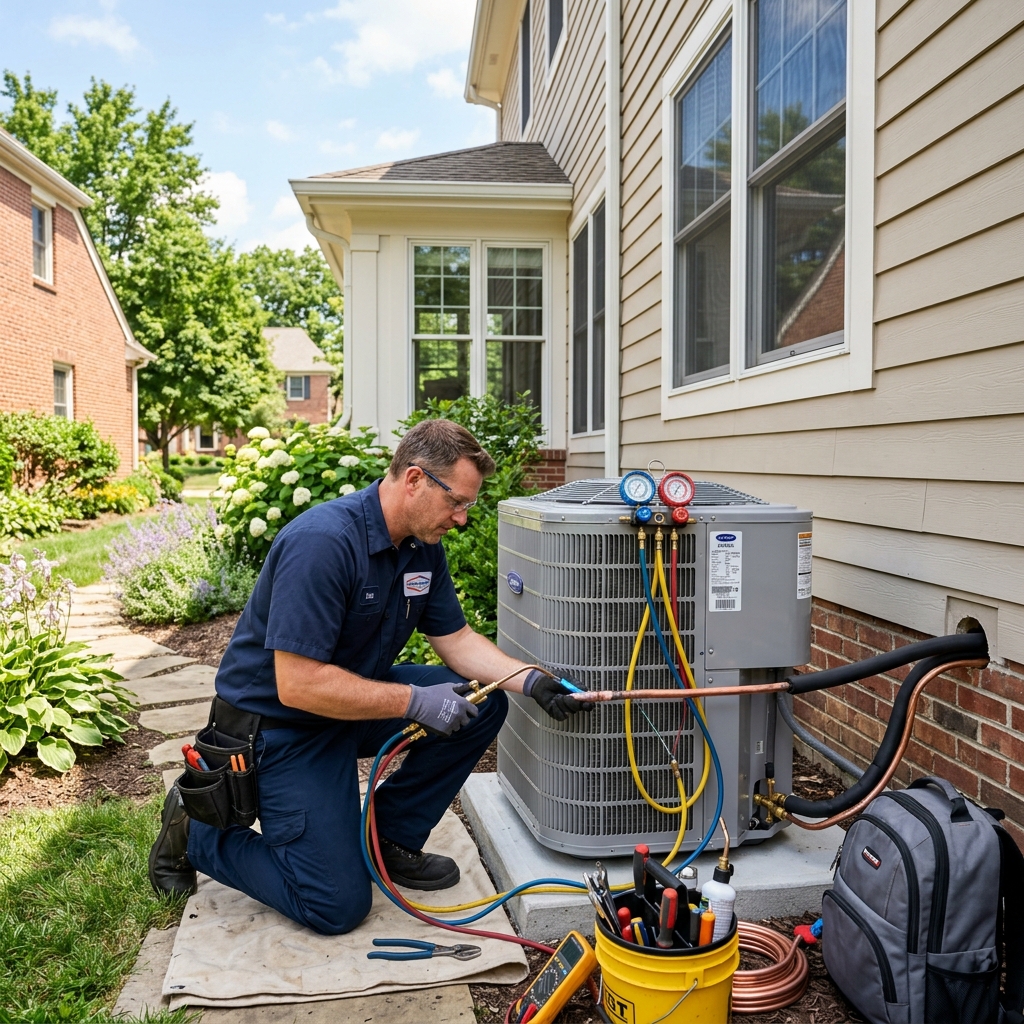
How Much Does a New HVAC System Cost in 2026?
A new HVAC system costs $5,000 to $12,000 installed in 2026, with most homeowners paying $7,500 to $8,500. Full cost breakdown by system type and region.
The average American homeowner pays $7,500 to $8,500 for a full HVAC system replacement in 2026. That number has climbed about 15% since 2022, driven by the refrigerant transition to R-454B, updated efficiency standards, and labor shortages in the trades (ACHR News, 2025).
But "average" doesn't mean much when quotes for the same home can range from $5,000 to $12,000 depending on the contractor, the equipment brand, and how much of your existing infrastructure needs to change. A straightforward swap of a furnace and AC with existing ductwork costs far less than a first-time heat pump installation in a home that's never had central air.
This guide breaks down where the money goes, what drives the price up or down, and how to get the best deal on your replacement.
- A full HVAC replacement costs $5,000 to $12,000 in 2026. Most homeowners pay $7,500 to $8,500.
- Equipment is 40 to 60% of the cost. Labor is 30 to 40%. Materials and permits are 10 to 20%.
- Heat pumps cost more than furnaces upfront, but IRA tax credits of up to $2,000 close the gap.
- Replacing ductwork adds $2,000 to $6,000 to the total.
- Always get at least three written quotes and compare the scope of work, not just the bottom line.
What's Included in an HVAC System Replacement?
A "full system" replacement typically means replacing both the outdoor unit (condenser or heat pump) and the indoor unit (furnace, air handler, or evaporator coil). Here's what you're paying for:
Equipment (40 to 60% of total cost):
Labor (30 to 40%):
Materials and permits (10 to 20%):
Cost by System Type
Different HVAC system types have different price ranges.
| System Type | Equipment | Installation | Total Installed |
|---|---|---|---|
| Central AC + Gas Furnace | $3,000 to $6,000 | $2,000 to $5,000 | $5,000 to $11,000 |
| Heat Pump (ducted) | $2,500 to $5,500 | $2,000 to $4,500 | $4,500 to $10,000 |
| Ductless Mini-Split (single) | $1,500 to $2,500 | $1,500 to $2,500 | $3,000 to $5,000 |
| Ductless Mini-Split (multi) | $4,000 to $8,000 | $3,000 to $7,000 | $7,000 to $15,000 |
| Packaged System | $3,500 to $5,500 | $1,500 to $3,000 | $5,000 to $8,500 |
For ductless mini-split pricing, costs depend heavily on the number of indoor zones.
What Drives the Price Up?
Several factors push an HVAC installation above the average:
System size. Larger homes need larger systems. A 2-ton unit for a 1,000 sq ft home costs less than a 5-ton unit for a 3,000 sq ft home. Your contractor should determine size through a Manual J load calculation, not just square footage. Oversized systems waste energy and break down faster.
Efficiency level. A 15 SEER2 system costs $1,500 to $3,000 less than a 20+ SEER2 system. Higher SEER2 ratings save money on monthly bills, but the upfront premium is real. In hot climates, the payback period is shorter.
Ductwork condition. If your existing ducts are leaking, undersized, or damaged, you'll need duct repairs ($500 to $2,000) or a full duct replacement ($2,000 to $6,000). Leaky ducts can waste 20 to 30% of conditioned air, so fixing them often pays for itself in energy savings.
Access difficulty. Equipment in attics, crawl spaces, or tight mechanical rooms takes longer to install. Rooftop installations on commercial buildings require a crane, which adds $500 to $1,500.
Electrical upgrades. If you're switching from gas to electric (like replacing a gas furnace with a heat pump), your electrical panel may need an upgrade. A 200-amp panel upgrade costs $1,500 to $3,000.
R-454B transition. All new residential equipment manufactured after January 2025 uses R-454B refrigerant. The refrigerant itself costs about the same as R-410A, but some installation practices have changed because R-454B is classified as A2L (mildly flammable). This adds modest cost to the installation.
How to Save Money on Your HVAC Replacement
Claim the IRA tax credit. Heat pump installations qualify for up to $2,000 in federal tax credits through 2032. This includes ducted heat pumps, ductless mini-splits, and geothermal systems (Energy.gov, 2024). Gas furnaces do not qualify.
Check state and utility rebates. Many states and local utilities offer additional rebates for high-efficiency equipment. These stack with the federal credit. Search DSIRE for current incentives in your area.
Get three quotes. Prices vary significantly between contractors. Get at least three written quotes that specify the exact equipment model, SEER2 rating, scope of work, and warranty terms. Compare the details, not just the price.
Replace in spring or fall. HVAC contractors are busiest in summer (AC breakdowns) and winter (furnace failures). Scheduling your replacement in the shoulder seasons (March to May or September to November) often gets you better pricing and faster scheduling.
Don't skip the load calculation. A properly sized system costs less to operate and lasts longer. An oversized system short-cycles, wastes energy, and doesn't dehumidify properly. A contractor who sizes your system by square footage alone is cutting corners.
Consider financing. Many manufacturers and contractors offer 0% financing for 12 to 60 months on qualifying equipment. This lets you buy higher-efficiency equipment without a larger upfront payment.
Regional Price Differences
HVAC installation costs vary by region because of differences in labor rates, permit costs, and climate requirements.
| Region | Typical Total (AC + Furnace) | Notes |
|---|---|---|
| Northeast | $7,000 to $12,000 | Higher labor rates, cold-climate equipment |
| Southeast | $5,000 to $9,000 | High demand, longer cooling seasons |
| Midwest | $5,500 to $10,000 | Extreme temperature swings, dual-fuel popular |
| Southwest | $5,500 to $9,500 | Heat-focused, high SEER2 needed |
| West Coast | $7,500 to $13,000 | Highest labor rates, strict codes |
When to Repair vs. Replace
Not every HVAC problem requires a full replacement. Here's a general rule of thumb:
Repair if:
Replace if:
If your system is between 10 and 15 years old, it depends on the specific repair. A $300 capacitor replacement makes sense. A $2,500 compressor replacement on a 14-year-old system probably doesn't. For regular maintenance guidance, see our HVAC maintenance checklist.
Frequently Asked Questions
How much does it cost to replace just the AC unit?
Replacing only the outdoor AC condenser costs $2,500 to $5,000 installed. However, if your indoor coil is old or incompatible with the new refrigerant (R-454B), you may need to replace it too, which adds $1,000 to $2,500.
Is a more expensive HVAC system worth it?
In hot climates, yes. A higher-efficiency system costs more upfront but saves $200 to $500 per year on electricity. In mild climates with short cooling seasons, the payback period is longer, and a mid-range system may be the better value. See our SEER2 guide for the full breakdown.
How long does HVAC installation take?
A standard replacement (same location, existing ductwork) takes 1 to 2 days. A new installation, system conversion (gas to electric), or ductwork replacement can take 3 to 5 days.
Can I negotiate HVAC prices?
Yes. Contractors expect negotiation, especially in the off-season. Having multiple quotes gives you leverage. You can also ask about manufacturer rebates, financing promotions, and whether they'll match a competitor's price for the same equipment.
Should I replace the furnace and AC at the same time?
Usually, yes. The indoor and outdoor units are designed to work together as a matched system. Mixing a new outdoor unit with an old indoor unit (or vice versa) can reduce efficiency and may void the manufacturer's warranty.
Summary
A new HVAC system in 2026 costs $5,000 to $12,000 for most homeowners. Here's how to approach the purchase:
About WorkerGear Team
HVAC Instructor and Certified EPA Technician. Dedicated to helping students and HVAC apprentices pass their trade certification exams on the first attempt with expert tips and exam insights.