
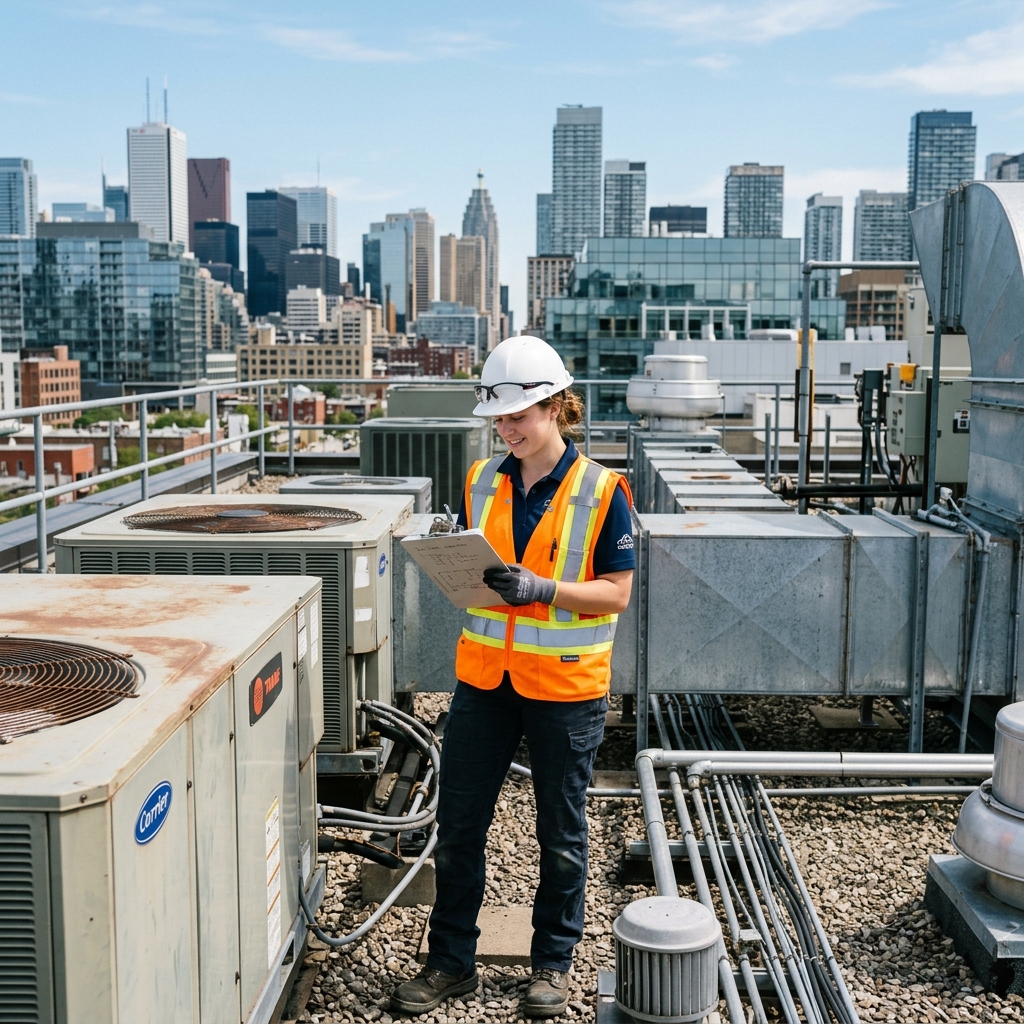
How to Become an HVAC Technician: Career Guide
HVAC technicians earn a median salary of $57,300 per year (BLS 2024). Learn the steps: trade school, EPA 608 certification, apprenticeship, and career path.
The Bureau of Labor Statistics projects 6% growth in HVAC and refrigeration mechanic jobs from 2022 to 2032, which translates to about 38,000 new job openings per year (BLS, 2024). The median pay is $57,300 per year, and experienced technicians in high-demand areas regularly earn $75,000 or more.
The HVAC industry has a workforce problem. Older technicians are retiring faster than new ones are entering the trade. The average age of an HVAC technician in the US is 45, and many companies report that they can't fill open positions (PHCC, 2024). If you're thinking about getting into the trades, HVAC is one of the most practical options available right now.
This guide walks through the steps to get started, what certifications you need, and what the career actually looks like day to day.
- HVAC technicians earn a median salary of $57,300/year (BLS 2024). Top earners make $80,000+.
- The typical path takes 6 months to 2 years of training, plus 2 to 5 years of apprenticeship.
- EPA 608 certification is legally required to handle refrigerants. You can't work without it.
- Job demand is strong: 6% projected growth with about 38,000 annual openings.
- Commercial and industrial HVAC pays more than residential, but residential has lower barriers to entry.
Step 1: Finish High School (or Get a GED)
A high school diploma or GED is the minimum educational requirement for most HVAC training programs and employers. If you're still in high school, take classes in:
Some high schools offer pre-apprenticeship programs or vocational tracks that include HVAC basics. If yours does, take advantage of it. You'll start your formal training ahead of your classmates.
Step 2: Complete HVAC Training
You have three main options for formal training:
Trade School or Community College (6 Months to 2 Years)
This is the most common path. Programs cover:
Certificate programs take 6 to 12 months. Associate degree programs take 2 years. Both prepare you for entry-level work. The associate degree covers more theory and includes general education courses, which can help if you want to move into engineering or management later.
Cost: $5,000 to $15,000 for a certificate. $10,000 to $25,000 for an associate degree. Community colleges are generally cheaper than private trade schools.
Apprenticeship (3 to 5 Years)
Apprenticeships combine on-the-job training with classroom instruction. You earn while you learn. Most apprenticeships are run through:
An apprenticeship typically requires 2,000 hours of on-the-job training per year plus 144+ hours of classroom instruction. Pay starts at 40 to 50% of a journeyman's wage and increases as you advance through the program. By year 3 or 4, you're earning close to full journeyman pay.
The advantage of an apprenticeship: you finish with 3 to 5 years of real work experience, which is worth more to employers than classroom hours alone.
Military Training
The US military trains thousands of HVAC technicians annually. Air Force (HVAC/R specialty, AFSC 3E1X1), Navy (Utilitiesman), and Army (Utilities Equipment Repairer) all have programs. Military training translates directly to civilian certifications and many states offer expedited licensing for veterans.
Step 3: Get EPA 608 Certification
This is non-negotiable. Under Section 608 of the Clean Air Act, anyone who works with refrigerants in stationary systems must hold EPA 608 certification (EPA, 2024).
There are four types:
| Type | Covers | Examples |
|---|---|---|
| Type I | Small appliances (under 5 lbs refrigerant) | Window AC, PTAC, mini fridge |
| Type II | High-pressure systems | Residential AC, heat pumps, rooftop units |
| Type III | Low-pressure systems | Centrifugal chillers |
| Universal | All of the above | Any system, any refrigerant |
The exam has a core section plus the three type-specific sections (80 questions total). A passing score is 70% on each section. Study materials are widely available, and most trade schools include EPA prep in their curriculum.
For a detailed study plan, see our guide on how to pass the EPA 608 exam and test your knowledge with our free EPA 608 practice test questions.
Step 4: Get State and Local Licenses
Licensing requirements vary by state. Some states require a state-level HVAC license. Others defer to local jurisdictions. A few states (like California, Florida, and Texas) have strict licensing requirements with mandatory work experience and additional exams.
Common requirements include:
Check your state's licensing board website for specifics. The HVAC Excellence website maintains a state-by-state licensing guide.
Step 5: Build Your Career
The career progression in HVAC typically follows this path:
Entry-level installer/helper (Year 1 to 2): You assist senior technicians with installations and basic repairs. Pay: $30,000 to $40,000/year. You're learning how to work with tools, read wiring diagrams, and handle equipment without breaking things.
Service technician (Year 3 to 5): You run service calls independently. Diagnosing problems, replacing parts, and communicating with customers. Pay: $45,000 to $60,000/year. This is where most technicians stay, and the work is steady.
Senior/lead technician (Year 5 to 10): You handle complex diagnostics, commercial systems, and train junior technicians. Pay: $60,000 to $80,000/year. At this level, understanding efficiency ratings and system design becomes more important.
Specialization options after 5+ years:
Starting your own business (Year 7+): Many technicians eventually start their own HVAC companies. You'll need a contractor's license, insurance, a truck, tools, and enough reputation to generate referral work. HVAC business owners who run a crew of 3 to 5 technicians can earn $100,000 to $200,000+ per year, though the risk and management burden are real.
What Does the Job Actually Look Like?
Honest answer: it's physical work in uncomfortable conditions.
The good parts:
The hard parts:
Most residential technicians work 40 to 50 hours per week. Summer and winter are the busy seasons. Spring and fall are slower, which is when many technicians take vacation.
The Refrigerant Transition: What New Technicians Need to Know
If you're entering the trade in 2026, you need to understand the refrigerant transition. As of January 2025, new residential equipment uses R-454B instead of R-410A under the AIM Act. R-454B has a lower global warming potential but is classified as A2L (mildly flammable).
This affects technicians directly:
The transition is not a crisis. It's a new procedure to learn. Technicians who understand both the old and new refrigerants are more valuable to employers.
Frequently Asked Questions
How long does it take to become an HVAC technician?
The fastest path is a 6 to 12 month trade school certificate followed by entry-level work. Most people are working independently as service technicians within 2 to 3 years. A full apprenticeship takes 3 to 5 years but includes paid on-the-job training.
Is HVAC a good career?
For people who enjoy hands-on problem solving, yes. The pay is above average for trades work, job demand is strong, and the barrier to entry is relatively low. The downsides are the physical demands and seasonal schedule pressure. It's not a desk job.
How much do HVAC technicians make?
The median is $57,300 per year (BLS 2024). Entry-level installers start at $30,000 to $40,000. Experienced service technicians earn $55,000 to $75,000. Commercial HVAC and controls specialists earn $75,000 to $110,000+. HVAC business owners can earn $100,000 to $200,000+ but carry business risk.
Do I need a college degree for HVAC?
No. A high school diploma/GED plus a trade school certificate or apprenticeship is the standard path. An associate degree can help if you want to move into engineering, sales, or management later, but it's not required for field work.
What's the hardest part of being an HVAC technician?
The physical demands. Working in extreme heat and cold, lifting heavy equipment, crawling in tight spaces, and working at heights. The electrical troubleshooting can also be challenging until you develop experience reading wiring diagrams and using a multimeter.
Summary
Becoming an HVAC technician is one of the fastest ways to get into a stable, well-paying career without a four-year degree.
The industry needs technicians right now. If you're good with your hands, can handle physical work, and like solving problems, HVAC is worth a serious look.
About WorkerGear Team
HVAC Instructor and Certified EPA Technician. Dedicated to helping students and HVAC apprentices pass their trade certification exams on the first attempt with expert tips and exam insights.