
Best HVAC Schools: Costs & Options Guide
Compare HVAC trade schools, community college degrees, and online programs in 2026. Learn program costs, length, accreditation, and financial aid.
In 2026, trade school enrollment across vocational programs increased 16% as students sought fast, affordable paths into high-paying skilled careers (National Student Clearinghouse, 2026). Choosing the right HVAC training program determines how quickly you enter the workforce, how much debt you incur, and how thoroughly prepared you are to pass the mandatory EPA 608 exam on your first attempt.
This comprehensive guide evaluates trade schools, community college degrees, and online training courses to help you select the best program for your budget and schedule.
- Certificate programs at vocational trade schools take 6 to 12 months and cost between $3,000 and $8,000 (NCCER, 2026).
- Two-year Associate of Applied Science (AAS) degrees at community colleges cost $6,000 to $15,000 and cover advanced commercial systems.
- Accreditation from HVAC Excellence or PAHRA ensures program quality and federal financial aid eligibility.
- Most accredited trade schools include built-in EPA 608 testing as part of their graduation requirements.
- Pair formal instruction with active study tools like WorkerGear's EPA 608 flashcards to master exam formulas early.
Types of HVAC Training Programs Compared
In 2026, aspiring technicians can choose from three primary institutional training models before entering the workforce (BLS.gov, 2026). To understand how trade school fits into overall career progression, read our flagship HVAC technician career guide.
1. Vocational Trade School Certificates
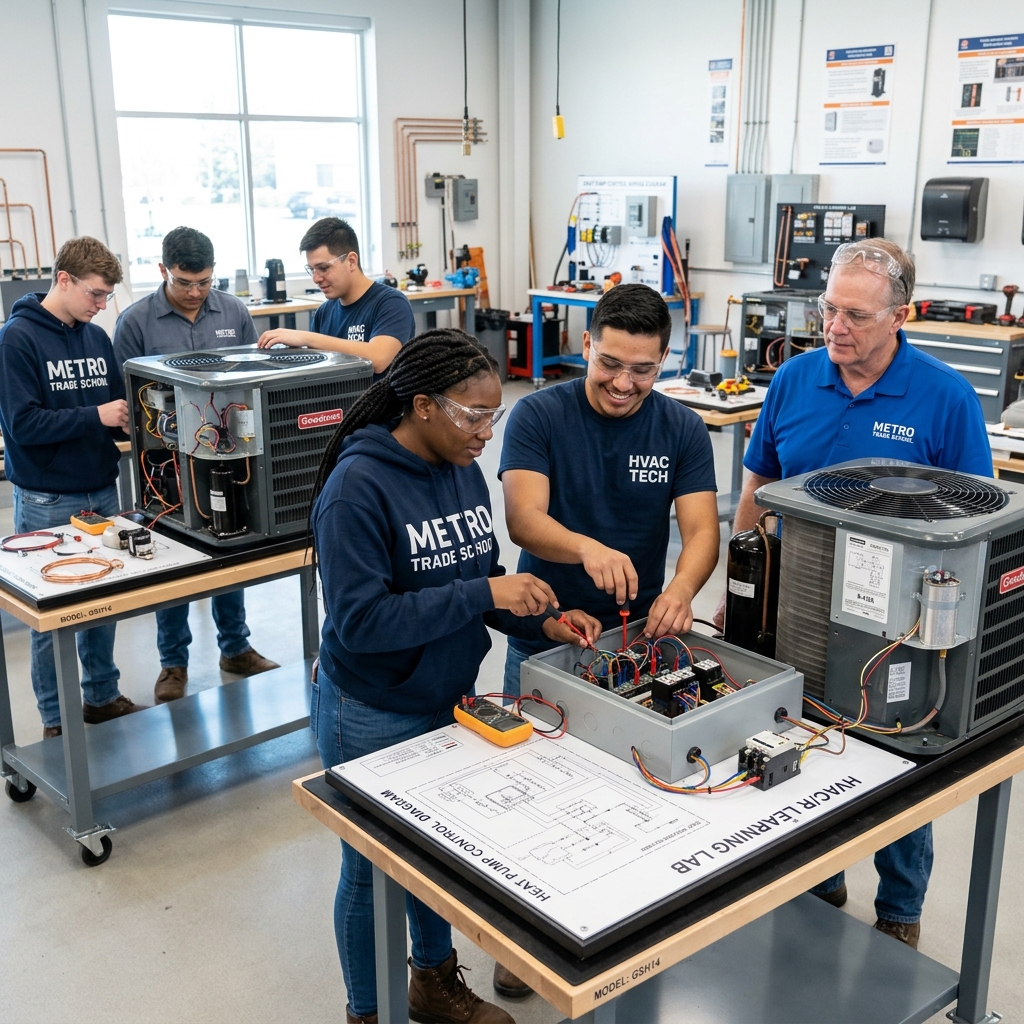
Private and public vocational schools offer fast-track certificates designed for quick job entry. Programs focus 80% of class time on practical lab work: wiring motors, brazing copper, evacuating systems, and troubleshooting compressors.2. Community College Associate Degrees
A 2-year Associate of Applied Science (AAS) in HVAC/R includes specialized courses in commercial refrigeration, hydronic heating, and load calculations alongside general education subjects. Graduates often start at higher hourly rates and transition faster into commercial service or management.3. Online HVAC Training Programs
Accredited hybrid online programs combine flexible video lectures for theory with weekend lab sessions or localized employer externships. They are ideal for working adults transitioning into the trade.How Much Does HVAC School Cost in 2026?
In 2026, average tuition for HVAC training ranges from $3,000 at public community colleges to $18,000 at private for-profit trade institutes (NCCER, 2026).
According to WorkerGear program cost tracking, public vocational schools and community college certificates offer the highest return on investment, allowing graduates to pay off total tuition within their first 3 to 6 months of employment.
| Program Type | Average Tuition | Required Tools/Books | Net Out-of-Pocket Cost |
|---|---|---|---|
| Public Community College Cert | $3,000 – $5,000 | $500 – $800 | $3,500 – $5,800 |
| Private Trade Institute Cert | $9,000 – $18,000 | $800 – $1,200 | $9,800 – $19,200 |
| Community College AAS Degree | $6,000 – $12,000 | $800 – $1,200 | $6,800 – $13,200 |
| Registered Apprenticeship | $0 (Earn while learning) | $300 – $600 | +$37k Earnings/Yr |
Key Accreditation Standards to Look For
In 2026, employers prioritize candidates from nationally accredited trade programs (HVAC Excellence, 2026). Always verify that a school holds accreditation from one of these two bodies:
1. HVAC Excellence: Evaluates program curriculum, instructor credentials, lab equipment, and student pass rates on certification exams. 2. PAHRA (Partnership for Air-Conditioning, Heating, Refrigeration Accreditation): Managed by AHRI, PAHRA accreditation validates that the curriculum meets strict manufacturer installation and service standards.
Attending an unaccredited private trade school is one of the costliest mistakes beginners make. Unaccredited programs cannot disburse federal Pell Grants, and their course credits rarely transfer if you pursue advanced certifications later.
Preparing for Licensing During School
In 2026, federal law mandates Section 608 certification for handling refrigerants (EPA.gov, 2026). Most quality trade schools host EPA testing during the final month of classes.
Before taking your exam:
Frequently Asked Questions
Can I learn HVAC online?
You can complete theoretical coursework online, but hands-on lab training is required to learn brazing, electrical troubleshooting, and gauge operation (BLS.gov, 2026).Is financial aid available for trade school?
Yes. Accredited trade schools and community colleges qualify for federal FAFSA grants (Pell Grants) and student loans.What tools do I need for HVAC school?
Students typically need a digital multimeter, wire strippers, manifold gauges, a service wrench, and basic hand tools ($300 to $600 total).Do HVAC schools guarantee job placement?
Accredited schools maintain career services departments with 85%+ job placement rates through local contractor partnerships.Where can I practice EPA 608 exam questions?
WorkerGear provides free interactive EPA 608 flashcards and complete practice test guides.Summary & Source References
Enrolling in an accredited HVAC trade school or community college program gives you the skills and certifications needed to launch a successful trade career in less than a year.
Start building your foundation today with WorkerGear's interactive EPA 608 flashcards and technical study guides.
Source Documentation
About WorkerGear Team
HVAC Instructor and Certified EPA Technician. Dedicated to helping students and HVAC apprentices pass their trade certification exams on the first attempt with expert tips and exam insights.