
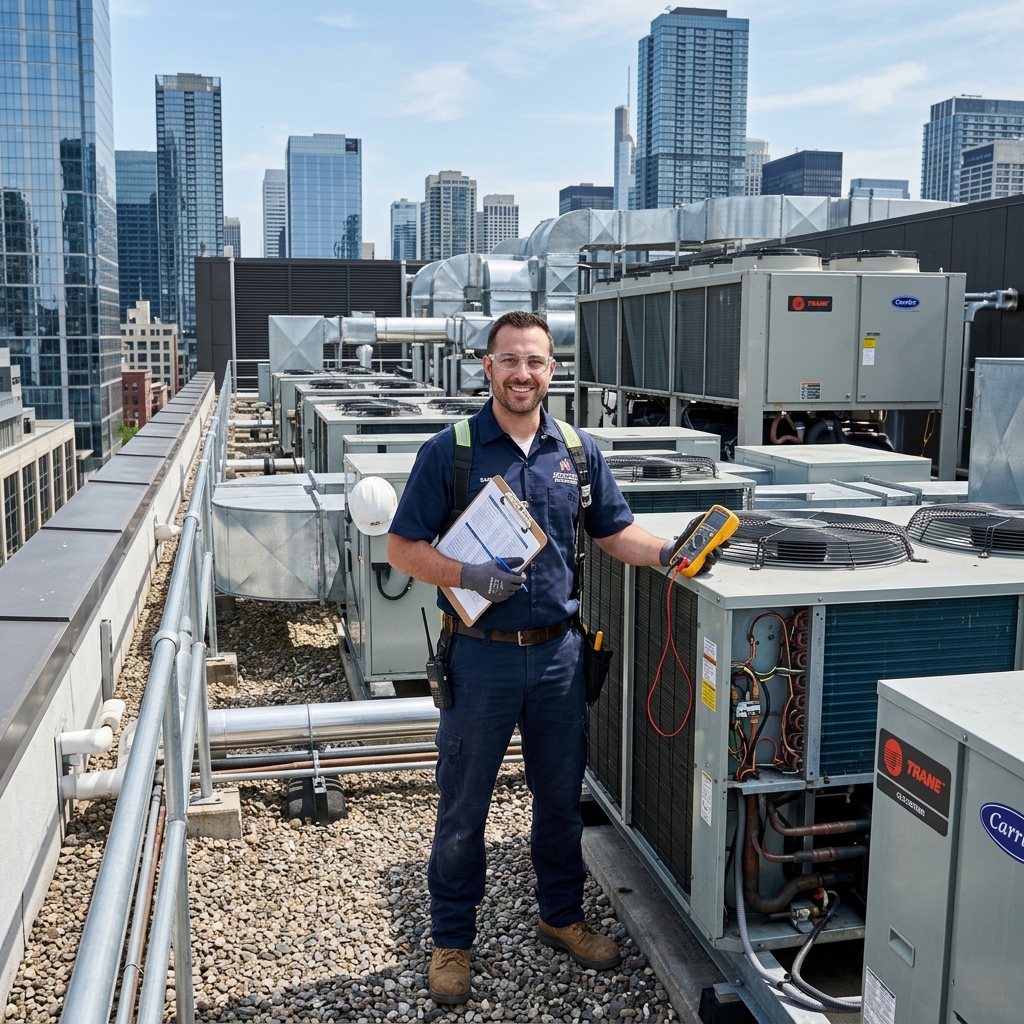
HVAC Technician Career: School, Salary & Path
Discover how to become an HVAC technician in 2026. Learn trade school costs, apprenticeship steps, average salaries, and required certifications.
In 2026, data published by the U.S. Bureau of Labor Statistics indicates that employment for heating, air conditioning, and refrigeration mechanics and installers is projected to grow 6% through 2032, faster than the average for all occupations (BLS.gov, 2026). As climate volatility increases and commercial buildings retrofit to meet low-GWP refrigerant standards under the AIM Act, skilled HVAC technicians remain in high demand across the United States and Canada.
This comprehensive pillar guide outlines the complete roadmap to building a career as a certified HVAC technician, covering trade school options, apprenticeship pathways, salary expectations, and required licensing.
- The median annual wage for HVAC technicians in 2026 is $59,810 per year ($28.75/hr), with top earners exceeding $92,000 annually (BLS.gov, 2026).
- Entry into the trade requires either a 6-to-24 month accredited trade school program or a 3-to-5 year paid apprenticeship.
- Section 608 Universal Certification from the EPA is mandatory for any technician handling regulated refrigerants.
- Specialized skills in A2L flammable refrigerants (R-454B) and variable-speed heat pumps command premium pay rates.
- Active learning tools like WorkerGear's EPA 608 practice test accelerate certification preparation.
What Does an HVAC Technician Do?
In 2026, HVAC technicians install, maintain, repair, and overhaul heating, ventilation, air conditioning, and refrigeration systems in residential, commercial, and industrial settings (BLS.gov, 2026). Technicians work with electrical circuits, sheet metal ductwork, copper piping, brazing torches, and advanced computer diagnostics.
Core Duties
1. System Installation: Mounting condensers, air handlers, furnaces, and ductwork according to local building codes. 2. Diagnostic Troubleshooting: Reading electrical schematics, measuring gas pressure, testing capacitors, and isolating refrigerant leaks. 3. Preventive Maintenance: Cleaning coils, replacing filters, checking belt tension, and inspecting condensate drains. 4. Refrigerant Recovery: Capturing and recycling regulated refrigerants according to EPA Section 608 mandates.For a full breakdown of maintenance procedures, review our HVAC maintenance checklist.
How to Become an HVAC Technician: 4 Education Paths
In 2026, trade school enrollment in technical fields grew 16% over traditional 4-year degree programs, driven by rising college tuition and high skilled-trade wages (National Student Clearinghouse, 2026). Aspiring technicians can choose between four main training routes:
1. Trade School / Community College Certificate (6 to 12 Months)
Certificate programs offer intensive, hands-on training focusing purely on HVAC fundamentals, electrical controls, and refrigerant handling. Total tuition ranges from $3,000 to $8,000.2. Associate Degree in HVAC/R Technology (2 Years)
Offered by community colleges, an Associate of Applied Science (AAS) degree includes advanced coursework in commercial refrigeration, hydronic heating, and system design. Tuition ranges from $6,000 to $15,000. For an in-depth breakdown of program options and costs, see our guide on best HVAC schools and training programs.3. Registered Union or Non-Union Apprenticeship (3 to 5 Years)
Apprenticeships combine 8,000 hours of paid on-the-job training with 576 hours of classroom instruction. You earn a paycheck from day one that increases as your skills progress. Read our detailed guide on how to get into HVAC with no experience.4. Military Technical Training
The U.S. Armed Forces train thousands of HVAC specialists annually across the Air Force, Navy, and Army. Military training translates directly to civilian certifications under the COOL program.How Much Do HVAC Technicians Make? (2026 Salary Data)
In 2026, official Bureau of Labor Statistics data reports that the median annual wage for HVAC mechanics and installers is $59,810 per year ($28.75 per hour), with the highest 10% earning over $92,000 annually (BLS.gov, 2026).
According to WorkerGear industry earnings tracking, specialized commercial chiller technicians and union journeymen in high cost-of-living states frequently clear $110,000+ per year with overtime and performance bonuses.
| Experience Level | Hourly Rate Range | Annual Earnings Range |
|---|---|---|
| First-Year Apprentice | $18.00 – $22.00 / hr | $37,440 – $45,760 |
| Mid-Level Technician (3-5 yrs) | $26.00 – $34.00 / hr | $54,080 – $70,720 |
| Journeyman / Master Tech | $36.00 – $48.00 / hr | $74,880 – $99,840 |
| Commercial Chiller Specialist | $45.00 – $60.00+ / hr | $93,600 – $124,800+ |
Mandatory Certifications and State Licensing
In 2026, federal law mandates that any technician maintaining, servicing, or repairing equipment that could release refrigerants into the atmosphere must hold EPA Section 608 certification (EPA.gov, 2026).
Many entry-level technicians assume state licensing is required everywhere. In reality, federal EPA certification is mandatory nationwide, while state contractor licensing rules vary significantly. Some states require individual technician licenses, while others only license the business owner.
Essential Industry Certifications
Frequently Asked Questions
Is HVAC a hard trade to learn?
HVAC requires learning electrical theory, fluid dynamics, and mechanical systems, but hands-on trade school programs make concepts accessible to motivated beginners (BLS.gov, 2026).How long does it take to become an HVAC technician?
You can complete a trade school certificate in 6 to 12 months, or enter a paid 3-to-5 year apprenticeship immediately after high school.Do I need a college degree for HVAC?
No. High school diploma or GED is sufficient. Employers prioritize accredited trade certificates and EPA 608 Universal licensing.Are HVAC jobs physically demanding?
Yes. Technicians frequently work in attics, crawlspaces, rooftops, and outdoors in extreme weather, lifting equipment up to 50 lbs.Where can I practice for the EPA 608 exam?
WorkerGear provides free interactive EPA 608 flashcards and a full online EPA 608 practice test.Summary & Source References
Building a career as an HVAC technician offers fast job placement, strong earning potential, and protection against automation. By completing accredited training and locking in your EPA 608 certification, you can establish a stable, lucrative trade career.
Start your preparation today with WorkerGear's interactive EPA 608 flashcards and explore our complete library of technical study resources.
Source Documentation
About WorkerGear Team
HVAC Instructor and Certified EPA Technician. Dedicated to helping students and HVAC apprentices pass their trade certification exams on the first attempt with expert tips and exam insights.